
Dumpster Pad & Enclosure Cleaning in Western New York
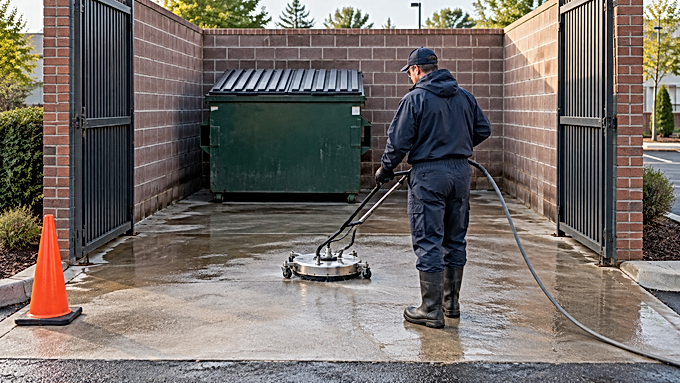
The dumpster area is easy to ignore until buildup becomes a daily problem for staff, tenants or vendors. A dirty pad can carry food residue, tracked waste and grease-related deposits well beyond the enclosure.
WNY Pressure Wash provides dumpster pad and enclosure cleaning for commercial properties throughout Western New York. We review the concrete pad, accessible enclosure surfaces and nearby service walkways to define a practical exterior cleaning scope.
The job starts with access and the material on the ground. A routine pad wash is different from removing bulk waste, handling unknown substances or correcting a leaking container. Tell us what is present so the proposed service matches the problem.
At a glance
- Best fit: restaurants, retail centers, apartment communities, offices and managed commercial properties.
- Focus: suitable pad surfaces, accessible enclosure walls and surrounding service-area buildup.
- Access: an empty or safely accessible work area, coordinated with management and the waste hauler.
- Planning: waste type, drainage, water availability and the right time relative to collection.
Make the request specific. Include photos of the full enclosure and the worst deposits. Let us know whether the dumpster can be moved by the authorized hauler and when the area is normally least busy.
Ready to discuss your property? Call (585) 888-9274 or request a commercial estimate.

What is included in dumpster pad cleaning?
A dumpster pad cleaning scope can cover suitable concrete beneath and around the container, accessible enclosure walls, gates and a defined approach area. The exact boundaries matter: cleaning the pad does not automatically include washing the interior of the dumpster or removing everything stored beside it.
If adjacent walkways are carrying residue out of the enclosure, include them in the request. An estimate can separate the pad, enclosure and surrounding concrete so you can see where the work begins and ends.
The waste container remains the responsibility of its owner or authorized operator. Any movement must be coordinated safely with the appropriate party; it should not be assumed that the washing crew will relocate a loaded dumpster.
Start after loose waste is addressed
Bags, cardboard, pallets and loose refuse can prevent access to the surface. Before cleaning, confirm who will remove those items and when the area will be ready.
Scheduling near a regular pickup can make sense, but the details depend on the container arrangement. An emptied dumpster may still sit over part of the slab. Photos help establish how much is accessible and whether a separate arrangement with the hauler is necessary.
This preparation is not a minor detail. It determines whether the crew can clean the intended area or only the exposed perimeter.
Grease, residue and permanent staining
Food residue, ordinary dirt and concentrated grease deposits require different assessment. Explain what the property uses the enclosure for and identify any unusual material, active leak or unknown substance.
Appropriate cleaning can remove surface buildup and improve the area’s appearance. It cannot repair a leaking container, undo deterioration or guarantee that old absorbed staining will disappear. Some marks can remain after the removable material is gone.
An enclosure with repeated accumulation may need a change in waste handling or pickup practices as well as cleaning. Washing addresses the existing condition; it does not eliminate the source of future spills.
Drainage and wash-water planning
A dumpster area may drain toward the parking lot, a low spot or a nearby inlet. We need to understand that route before defining the work.
The site review should identify drainage, the substances involved and any containment, recovery or disposal arrangements required for the project. Those details need to be confirmed rather than assumed to be included in a basic wash price.
If your property has a stormwater plan, wastewater restrictions or specific site procedures, send that information with the quote request. Where a project requires work beyond the agreed cleaning scope, it must be addressed before scheduling.
Keep staff and vendor access workable
Dumpster enclosures are active service areas. Employees may need access during a shift, and a waste truck may arrive within a fixed collection window.
Tell us the pickup schedule, delivery activity, gate requirements and the person responsible for access. Ask about a quieter work window and any temporary restriction needed while the area is being cleaned.
For apartment or retail properties, management may also need to notify tenants. A short, clear notice about the work area and timing can prevent vehicles or loose items from blocking the project.
Recurring pad cleaning without an arbitrary schedule
The right frequency depends on the property. A restaurant handling food waste may develop buildup differently from an office using the same size container. Tenant behavior, pickup frequency, enclosure design and weather also affect conditions.
A recurring plan can begin with a defined initial cleanup and then review what returns between visits. That helps distinguish routine maintenance from heavier work caused by an ongoing leak or change in waste volume.
For managers overseeing several sites, record the container location, gate access, pickup day and known problem areas for each property. Those details make repeat service easier to coordinate.
What affects the price?
Pad size, enclosure surfaces, deposit type, accessibility and required preparation all influence the estimate. Special handling or recovery requirements, restricted scheduling and multiple separated enclosures can also affect the job.
The fastest way to start is to send the address, photos and a short description of what is on the surface. Include the pickup day and whether the request is for a one-time cleanup or recurring service.
Dumpster area cleaning across Western New York
WNY Pressure Wash serves commercial and managed properties across Genesee, Erie, Monroe, Niagara, Orleans, Wyoming and Livingston Counties. Our Batavia–Le Roy location supports work throughout the Buffalo–Rochester region and surrounding communities.
We can review a single restaurant enclosure, an apartment property or a group of commercial sites. Availability and the work plan are confirmed for each location and scope.
Dumpster pad cleaning questions
Do you remove trash or haul away bulk items?
Waste removal must be specifically addressed before washing. A pad-cleaning estimate should not be interpreted as bulk hauling or hazardous-material handling.
Can you move the dumpster?
Coordinate container movement with the authorized hauler or owner. Access and movement arrangements need to be settled before the cleaning visit.
Will cleaning permanently eliminate odors?
Removing appropriate residue may improve the condition of the area, but odors can return if waste, leaks or collection problems remain. Permanent odor elimination is not a realistic promise for an active waste area.
Can you clean the enclosure walls and gates?
Suitable, accessible surfaces can be included after material and condition review. Identify those surfaces in your request.
When should the pad be cleaned?
A pickup-related or otherwise quiet window may work well. The right timing depends on access, the container and site activity.
Request a dumpster pad cleaning estimate
Use the commercial estimate form to send the site address and describe the buildup. Call (585) 888-9274 if you would rather discuss the access and scheduling first.
Related services: Restaurant & Drive-Thru Cleaning, Property Management Cleaning Plans, and Storefront & Plaza Cleaning.